

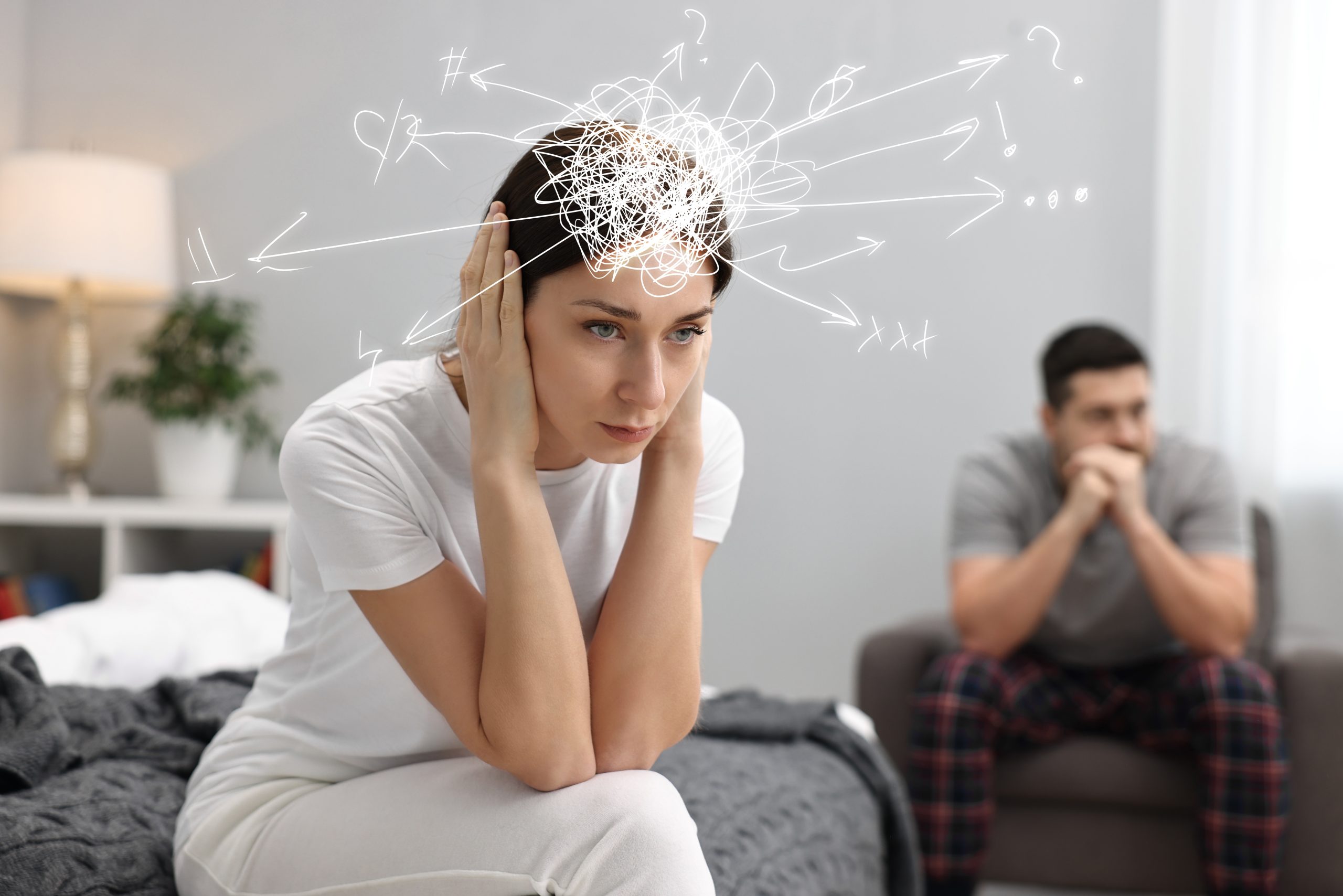
When we think about anxiety, we often think about worrying, overthinking, fear or feeling unable to switch off.
But anxiety isn’t just something that happens in your mind. It can have a very real and sometimes powerful effect on your body.
You might find yourself feeling sick, dizzy, shaky, exhausted or short of breath. You may experience headaches, stomach problems, a racing heart or tightness in your chest. Sometimes, these physical symptoms can be so intense that you start to wonder whether something is seriously wrong.
So, why can anxiety make you feel so physically unwell?
Anxiety affects the whole body
When we feel anxious, our brain and body respond as though we are under threat.
This is sometimes known as the fight, flight or freeze response. Your body releases stress hormones, including adrenaline and cortisol, preparing you to respond to danger.
This response can be extremely useful if you are actually in danger. Your heart beats faster, your breathing changes and you become more alert.
The problem is that your body’s alarm system can also be activated when there is no immediate physical danger.
A difficult conversation, work pressure, relationship problems, financial worries, health concerns or even thoughts about something that might happen can all trigger an anxiety response.
Your body doesn’t necessarily distinguish between a real physical threat and a thought that feels threatening.
What physical symptoms can anxiety cause?
Anxiety can affect people differently, but common physical symptoms include:
- Feeling sick or nauseous
- Stomach cramps, bloating or digestive problems
- Diarrhoea or constipation
- A racing, pounding or noticeable heartbeat
- Feeling dizzy, light-headed or faint
- Shortness of breath or feeling unable to get a satisfying breath
- Chest tightness or discomfort
- Sweating or feeling unusually hot
- Shaking or trembling
- Headaches
- Muscle tension and aches
- Feeling exhausted or drained
- Pins and needles
- Difficulty sleeping
- Changes in appetite
These symptoms are recognised physical effects of anxiety and can sometimes occur even when you don’t consciously feel particularly anxious.
Why does anxiety make you feel sick?
One of the most common questions people ask is:
“Why does anxiety make me feel physically sick?”
When your body believes that you’re under threat, it prioritises systems that could help you respond quickly.
This can affect digestion and your stomach, which may lead to nausea, butterflies, stomach cramps or changes in your bowel habits.
If you’ve ever felt sick before an interview, exam, presentation or difficult conversation, you’ve probably experienced this connection between anxiety and your body.
For some people, however, this response can become much more frequent.
Anxiety can create a vicious cycle
One of the most difficult things about physical anxiety symptoms is that they can become frightening in their own right.
For example:
You feel your heart racing → you notice it → you become frightened → you worry something is wrong → your anxiety increases → your heart beats even faster.
The same can happen with dizziness, chest sensations, breathlessness or nausea.
The physical sensation creates anxiety, and the anxiety makes the physical sensation stronger.
This can become a difficult cycle to break.
It can also lead to health anxiety, where you become increasingly focused on physical sensations and worry that they are signs of a serious illness. Repeatedly checking your body, searching symptoms online or seeking reassurance can sometimes provide temporary relief but keep the cycle going.
What about panic attacks?
During a panic attack, the body’s anxiety response can become extremely intense very quickly.
You might experience a racing heart, dizziness, sweating, shaking, nausea, chest or stomach pain, breathlessness or a feeling that you are going to faint or lose control.
Because these symptoms can feel so physical, it is understandable that someone experiencing their first panic attack may believe they are having a medical emergency.
Panic attacks are usually very frightening, but they are an intense anxiety response and commonly last around 5–20 minutes.
“But I don’t feel anxious…”
Sometimes people say:
“I don’t feel particularly anxious, so why is my body reacting like this?”
Anxiety isn’t always experienced as obvious worry.
You may have been functioning under pressure for weeks or months without recognising how much stress you are carrying. Your body may begin to show signs before you consciously recognise that you are struggling.
You might notice:
- poor sleep
- irritability
- headaches
- digestive problems
- muscle tension
- exhaustion
- difficulty concentrating
- feeling constantly “on edge”
Sometimes the physical symptoms are the thing that makes you realise that something needs attention.
Why understanding the connection can help
When you don’t understand what’s happening in your body, physical anxiety symptoms can feel frightening.
Understanding the fight-or-flight response can help you begin to recognise:
“My body is reacting to a perceived threat. That doesn’t necessarily mean I am in danger.”
This doesn’t mean that you should simply ignore physical symptoms or assume everything is anxiety.
If you have new, persistent, severe or worrying physical symptoms, it is important to speak to your GP or another appropriate healthcare professional rather than self-diagnosing. Anxiety can cause physical symptoms, but physical symptoms can also have other causes.
What can help with physical symptoms of anxiety?
The aim isn’t necessarily to make every physical sensation disappear immediately.
Instead, therapy can help you understand the relationship between your thoughts, emotions, physical sensations and behaviours.
Depending on your individual circumstances, this might involve learning to:
- recognise your anxiety triggers
- understand your body’s anxiety response
- notice unhelpful thought patterns
- reduce reassurance-seeking and checking
- develop strategies for managing worry
- respond differently to physical sensations
- work with panic and fear rather than avoiding them
- build healthier ways of managing stress
For some people, CBT can be particularly helpful because it explores the relationship between thoughts, feelings, physical sensations and behaviours.
You don’t have to live feeling constantly unwell
When anxiety is showing up physically, it can be exhausting.
You may feel as though your body is constantly letting you down or that you need to keep checking whether something is wrong.
But anxiety is a whole-body experience, and understanding that connection can be an important first step towards changing the cycle.
If anxiety is affecting your day-to-day life, your relationships, your work or your confidence, you don’t have to manage it on your own.
Anxiety counselling at Nightingale Counselling Consultancy
At Nightingale Counselling Consultancy, we understand that anxiety can affect both your mental and physical wellbeing.
Counselling can provide a safe space to explore what may be contributing to your anxiety and develop strategies to help you feel more in control.
You don’t have to wait until anxiety becomes overwhelming before asking for support.