

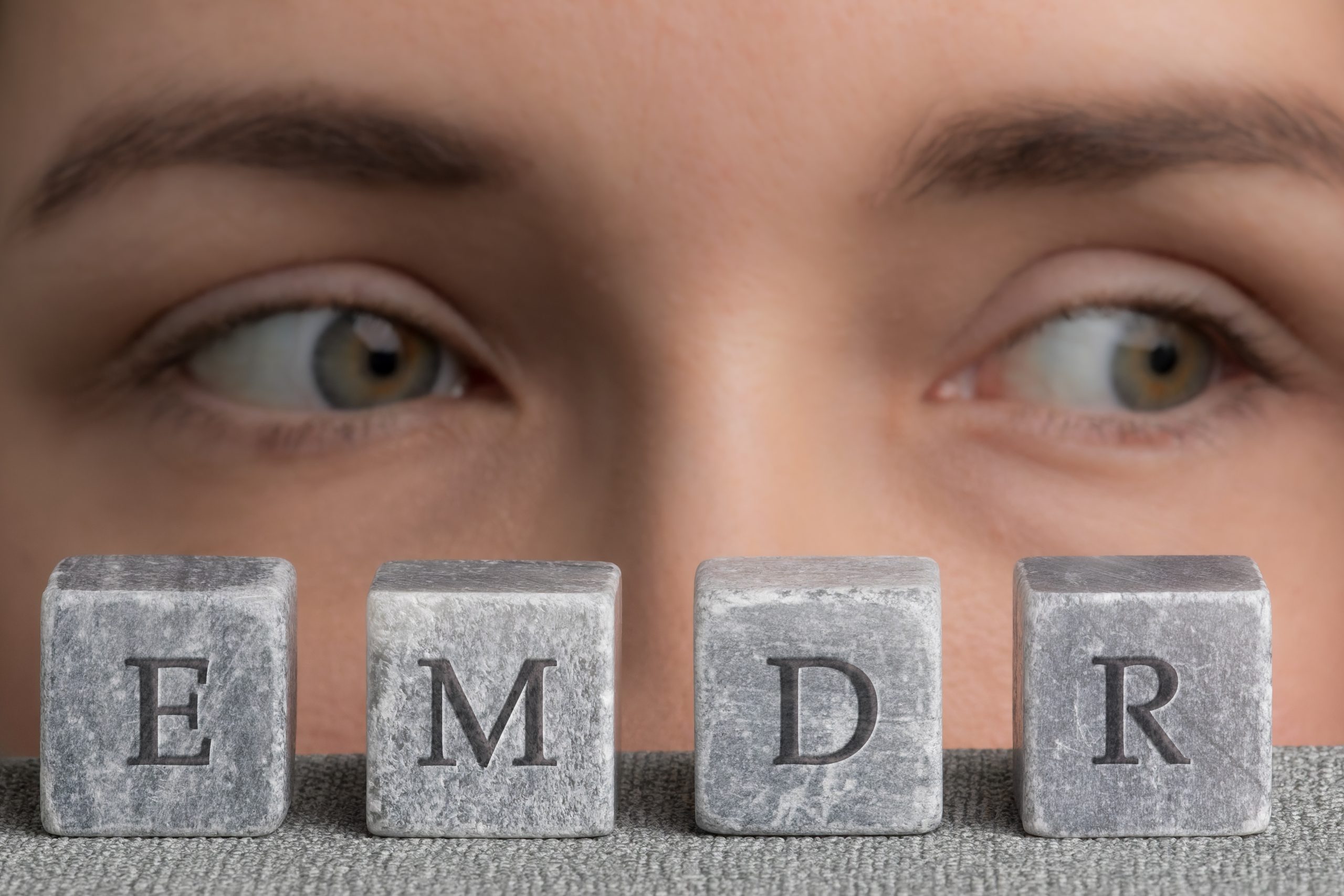
If you have ever felt like you understand your trauma intellectually but still feel the pain of it in your body, you are not alone. Traditional talk therapy is excellent for gaining insight, but trauma doesn’t live in the logical part of the brain. It gets trapped in the survival centre of your nervous system.
This is why you can tell yourself “I am safe now,” while your heart still races, your muscles tense, and your mind screen-saves your worst memories.
Eye Movement Desensitisation and Reprocessing (EMDR) is a unique, evidence-based therapy designed to unlock those trapped memories, allowing your brain to naturally process and file them away where they belong: in the past.
What Exactly is EMDR?
When you experience an overwhelming or traumatic event, your brain’s natural ability to process information can get overloaded. The memory gets locked in your nervous system exactly as it happened—with the original sights, sounds, thoughts, and bodily sensations completely intact. When something triggers you today, that old memory is reactivated, making you feel like you are reliving the event.
EMDR acts like a catalyst for your brain’s natural healing system. By using bilateral stimulation(typically side-to-side eye movements, light taps, or auditory tones), EMDR mimics the natural processing that happens during REM sleep.
This bilateral stimulation helps your left brain (logic) and right brain (emotion) communicate, allowing the traumatic memory to be reprocessed. The goal is not to forget what happened, but to strip away the intense emotional and physical sting.
What to Expect: It’s Not Just “Eye Movements”
A common misconception is that EMDR is just waving fingers in front of your eyes. In our practice, EMDR is a structured, comprehensive eight-phase treatment built entirely around your safety and comfort.
- Phase 1 & 2: Preparation and Safety: We never jump straight into hard memories. First, we get to know your history and equip you with powerful grounding and calming techniques. You will build a mental “Safe Place” that you can return to at any moment.
- Phase 3 & 4: Targeting and Desensitisation: Once you feel secure, we identify a specific target memory. While you briefly focus on the memory, we introduce the bilateral stimulation (eye movements or taps). You don’t have to talk about the trauma in microscopic detail—your brain does the heavy lifting internally.
- Phase 5 & 6: Installation and Body Scan: We help replace negative beliefs (like “It was my fault”) with positive, adaptive beliefs (like “I did the best I could, and I am safe now”). We then scan your body to ensure all residual physical tension from the memory is gone.
- Phase 7 & 8: Closure and Evaluation: Session end with grounding exercises so you leave feeling calm, safe, and fully present in the current room.
Why EMDR is a Game-Changer for Prospective Clients
Clients often choose EMDR because it offers a distinct set of freedom over traditional talk therapies:
- Less Talking Required: You do not have to narrate your worst experiences over and over again. If a memory is too painful to speak aloud, EMDR can still process it effectively.
- Faster Relief: Because EMDR works directly with the nervous system and brain chemistry, many clients experience shifts and relief much faster than through standard talk therapy alone.
- Deep, Somatic Healing: EMDR resolves the physical “charge” of anxiety. Clients frequently report that their chronic muscle tension, stomach issues, and hypervigilance fade away alongside the emotional distress.
You do not have to remain a prisoner to your past. Your brain is wired for healing; EMDR is simply the tool that unlocks that innate capacity.
Sheila is a leading authority in Integrative Psychotherapy & EMDR
Sheila Coles MSc UKCP GMBPsS MBACP
Psychotherapist & Clinical Supervisor